
Women of a Promiscuous Nature explores effects of Chamberlain-Kahn Act
I was very interested in reading Women of a Promiscuous Nature by Donna Everhart as I read the novel Charity Girl (focused around the same basic morality laws) a decade or more ago. It was eye-opening as far as exploring orders restricting women’s personal and sexual freedom, but there were things I wish would have been explored more in-depth within that book.
What were these morality laws governing, you ask?
The Chamberlain-Kahn Act of 1918 was an act enforced for decades allowing for the detention of women suspected of prostitution. In fact, many women were detained for not conforming to standard behavior patterns, for being abuse victims, and sometimes, simply for existing in the wrong place at the wrong time.
More specifically, the act authorized federal officials to detain and isolate women suspected of having venereal diseases. The point was to safeguard military personnel, and it was implemented through the “American Plan.” After being rounded up and detained, women could expect to undergo a series of invasive treatments for sexually transmitted infections they may or may not have, undergo elected or involuntary abortions, and be sterilized without their informed consent.
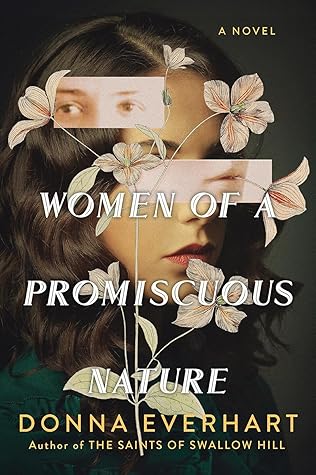
Women of a Promiscuous Nature goes deeper in its exploration of the impact of the laws by examining the points of view of three different women, including two different victims of the law. Both are innocent of any ‘wrongdoing’ as defined by those laws — one is rounded up simply for living independently, and one is a juvenile victim of incest.
Ruth and Stella bring two different reasons for their containment to the book as well as two different methods of reacting. Ruth — being older — is more full of righteous indignation, while Stella views the facility as a safe haven through most of the volume. I think Stella’s perspective really differentiated the book from other volumes exploring similar topics and illustrated the vulnerability of young women and girls throughout time.
Her relationship with the superintendent, Mrs. Baker, also shows a different side to Baker that could have been left unexplored. It takes what could be a very good/bad discourse and lends it a bit of humanity on all fronts. While we may still hate Baker at the end and want her to be held accountable for all the harm visited on women under her leadership and guidance, we also see the nuances of her story.
The multiple point-of-views plus a fairly detailed examination of why other women were at the detention facility, or “Farm Colony,” really opened up the world and brought to light the harsh realities women can face very quickly in a society.